Woodcut Print
Overview
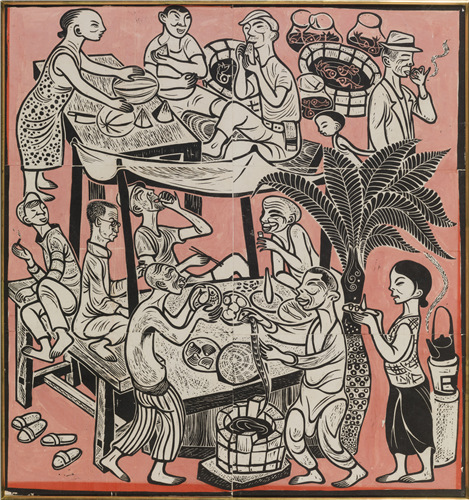
Woodcut printing is an ancient printing technique involving carving an image into a wooden block, applying ink to the surface, and pressing it onto paper or fabric. This form of printing has been integral to various cultures worldwide, notably in China and Japan, where it played a significant role in art and communication.
Historical Context and Cultural Significance
Woodcut printing has deep roots in Chinese history, dating back to the early Tang Dynasty (618–907). The technique evolved significantly during the Ming (1368-1644) and Qing (1644-1911) dynasties, with regions like Suzhou becoming prominent centers for the craft.
Chinese woodcut prints were initially used for religious texts but soon expanded to secular themes, reflecting the daily lives and aspirations of people. The prints became a popular medium for storytelling and disseminating information, with designs ranging from intricate landscapes to vivid depictions of historical events and folklore.
Techniques and Process
The process of creating woodcut prints involves several meticulous steps:
-
Designing: The artist sketches a design on paper, which is then transferred onto the surface of a wooden block.
-
Carving: Using various tools, the artist carves away the non-image areas, leaving the design raised.
-
Inking: Ink is applied to the raised surface of the block.
-
Printing: Paper or fabric is pressed onto the block to transfer the inked image.
Unique regional styles have developed over time, such as the Taohuawu woodcuts from Suzhou, known for their vibrant colors and intricate details, and the bold, expressive Qijiang woodcut prints.
Modern Revival and Challenges
In contemporary times, woodcut printing is experiencing a revival, partly due to efforts by cultural institutions and artisans aiming to preserve this traditional art form. For instance, the National Art Museum of China and other organizations have hosted exhibitions and workshops to promote woodcut prints. However, the craft faces challenges due to the dominance of modern printing technologies and the dwindling number of skilled artisans.
Efforts to revitalize woodcut printing include digital techniques that incorporate traditional aesthetics, collaborations with other art forms, and educational initiatives to train new generations of artists. Despite these challenges, woodcut printing remains a cherished cultural heritage, embodying the artistic ingenuity and historical richness of its practitioners.
Notable Practitioners and Exhibitions
Prominent figures in the world of woodcut prints include Huang Yongyu, whose works depict a fusion of traditional and contemporary themes. His exhibitions, like Forceful Cuts, showcase the enduring appeal and versatility of woodcut art. Similarly, Xu Bing's innovations in calligraphy and printmaking highlight the medium's adaptability to modern artistic expressions.
Exhibitions such as The Greatest Changes in the Past 100 Years and international collaborations have further elevated the visibility of woodcut prints, drawing attention to their historical significance and potential for future innovation. Article reference1. Artist brushes up on his character. chinadaily.com.cn. 20242. A chip off the old block. chinadaily.com.cn. 2021Photo Gallery(6 pictures)CategoriesArtsTagChinese PaintingRelatedChinese Picture BooksXu BingWoodcut PrintingHuang YongyuCatalogue1. Overview2. Historical Context and Cultural Significance3. Techniques and Process4. Modern Revival and Challenges5. Notable Practitioners and Exhibitions- - - []








